SlideMagic Blog

Frequent updates about all things presentations since 2008. Subscribe to never miss a post.

RSS
·Story

Will they, or won't they?

Some presentations involve a big, black and white outcome: who hosts the next Olympics, will the trip go through, etc. etc.

In the world of entertainment, the tension is part of the show, think Oscars or talent shows. In most other cases, postponing and building up to the long awaited verdict does not serve a clear purpose. People might actually be distracted and not really listening to your arguments, as they are frantically trying to figure out where you are heading to.

Better to say the answer straight in the first sentence, and then explain why.

·SlideMagic

Print bug fixed

For users who print their decks on physical paper, I patched a bug that was caused by the underlying software platform ‘Electron’. Everything should work now. Windows users might get a message that the developer SlideMagic is ‘unknown’. You can safely ignore that, I am working on getting rid of this warning. At your service.

·Layout

Super Venns

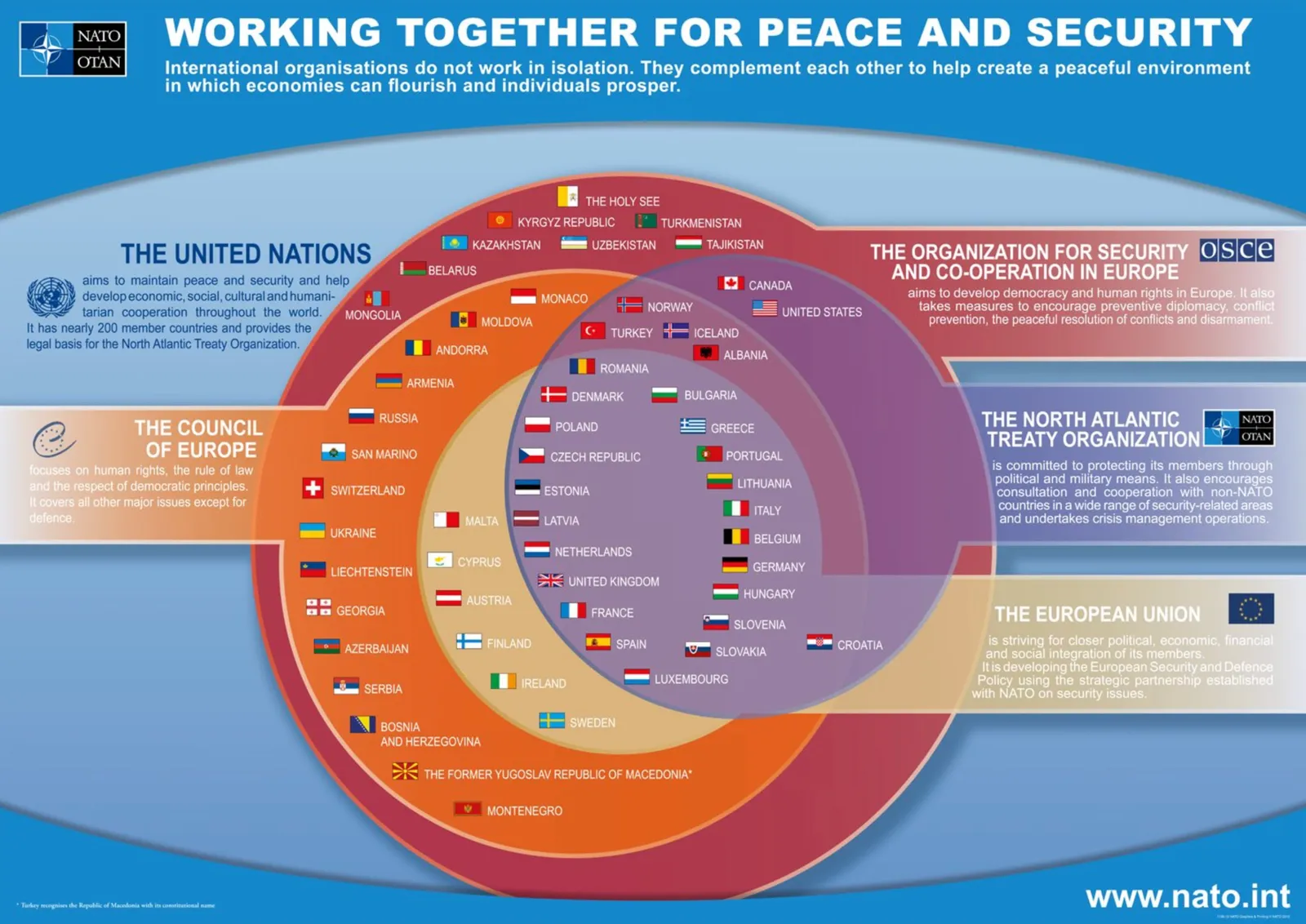
Below an attempt to show what countries belong to what organisation. (A bit outdated, the UK has left the EU). A good start with the groupings of the countries, and the circular layout of the flags. Also note that flags are displayed in their correct aspect ratios (Switzerland for example is square).

 Image found  here , probably by  Nato

Image found here , probably by Nato

What to do better?

  • Not a big fan of the gradients and shadows
  • I would put the Council of Europe label also on the right
  • It should be possible to get an even more harmonious and distributed layout by moving some flags, labels and circles around

The other approach to make this chart is to use a map and color code countries according to their memberships

·Culture

Your true colors

My wife and I are pitching the services of (a still very) small startup (with a big idea) to some pretty big corporations. Big corporations are busy and overloaded with requests of small companies to talk to them. It is fine to play hard to get, but if you accept a meeting/call, don’t cancel at the exact minute the meeting is about to start unless there is some medical emergency.

The world is small and memory is surprisingly good. Personally, I had a few cases of poor interactions with people as a presentation designer (not paying agreed invoices for example) with people that re-appeared 5-10 years later with a request for another presentation (‘‘Hey, I am doing my own startup now and got a meeting with these investors next week, can you help?”), or were the subject of a reference call (‘Do you think I can trust this person with my investment?’)

Basic human interaction hygiene.

·Story

Add an optional message

Most online services have some sort of invite-a-friend functionality that triggers a pre-populated email. Read through that message one more time. It is probably loaded with marketing jargon (“added value”), and uses superlatives to show how excited the user is (“super excited to finally have everything in one place”).

But is that really the words the user would use?

As an exercise imagine what a good friend of you would write to another good friend of you in her own words to talk about your product.

  1. It might inspire you to write a better pre-populated email message
  2. It might give you some honest product feedback without actually asking these users
·Story

Let them climb down the ladder

I have been posting less on the blog over the past weeks. Given the current events in Ukraine, it would just not look right when the SlideMagic twitter account posts happy titles such as “A new and exciting way to crop your images” amid all the other stuff that is going on.

The current war is also a big communication war. And in times of conflict, it might be wise to count to 10 before saying things after seeing these horrible images coming out of the battlefield. Western leaders have been very aggressive in their language: ‘total economic war’ etc. etc. The problem is with all of this is that you need to keep a ladder for the other side to climb down, rather than throwing oil on the fire. The world already knows that you are (rightfully) upset.

The better strategy:

  • Use a more matter of fact tone in communicating sanctions: “we don’t like what you are doing, here is what we do to show that we mean it, we will reverse if you do”
  • Show unity and resolve
  • Go after economic targets that really hurt, rather than things that are high profile but don’t actually mean very much
  • Instead of leaking to the press how many arms you supplied or might supply, brief them on how to calculate the economic impact of the sanctions, now, in 1 week, and one month from now
  • Maintain a cold and rational calculation of the financial damage done and communicate it
  • Maintain a cold and rational evidence trail of wire crimes committed and communicate it
  • Keep on ratcheting up the sanctions, without the polemic rhetoric.
Continue reading →
·Delivery

Zelensky changes world leaders' minds in a 5 minute video call

A very interesting background story in the Washington Post how Zelensky changed seasoned politicians’ minds in a 5 minute video call

After a perfunctory debate, the presidents and prime ministers quickly approved sanctions on Russian President Vladimir Putin, Foreign Minister Sergey Lavrov and some of Russia’s biggest banks. Talk of barring Russia from the global financial messaging system known as SWIFT, however, stalled amid skepticism on the part of Scholz and the leaders of Austria, Italy and Cyprus, according to officials familiar with the deliberations who spoke on the condition of anonymity to discuss the sensitive negotiations.

Then Ukrainian President Volodymyr Zelensky dialed into the meeting via teleconference with a bracing appeal that left some of the world-weary politicians with watery eyes. In just five minutes, Zelensky — speaking from the battlefield of Kyiv — pleaded with European leaders for an honest assessment of his country’s ambition to join the European Union and for genuine help in its fight with the Russian invaders. Ukraine needed its neighbors to step up with food, ammunition, fuel, sanctions, all of it.

“It was extremely, extremely emotional,” said a European official briefed on the call. “He was essentially saying, ‘Look, we are here dying for European ideals.’” Before ending the video call, Zelensky told the gathering matter-of-factly that it might be the last time they saw him alive, according to a senior European official who was present.

We can all learn from a presenter like this.

·Images

Take the meme celebrities out of your decks

The current meme culture has created a number of stock photo heros that people may now recognize in the street. Cliche stock photos are bad, meme celebrities are worse. Time to double check your sales decks and web sites. Some of your older colleagues might not be aware of these yet…

  iStockPhoto

iStockPhoto

Here is the background on the Hide the Pain Harold meme

  iStockPhoto

iStockPhoto

Here is the background story about the Distracted Boyfriend Meme

·Design

A sense of space

Consistency between slides is important in your presentation. There are the obvious elements that need to be consistent: fonts, layout, colours, etc. But also pay attention to more subtle ones in images. Color vs B&W, and the style of images. Peaceful landscapes, busy ‘real’ images, threatening thunder clouds, stylised super stock photo model images, “funny” face expressions, etc. etc.

Modern movies are a good analogy. In the good old days, movies would be filmed on an actual location. The story is set in a city, village, a house, a place where characters roam around and visit places from multiple angles all the time. Bit by bit, you start to understand the space in which the story is et.

New technology allows you to create pretty much any movie background you want, projected behind actors saying their lines in front of green screens. The result is that that sense of place is lost. The movie is set against a series of random backgrounds that do not seem connected. High resolution screens emphasize the disconnect between characters in the foreground, and the backgrounds. Something does not seem right…

Interestingly, I do not find this effect with classic cartoons, with totally artificial backgrounds, but the whole story seems cohesive


·Story

Slides in English, present in another language

English has become the default language in business. I would recommend anyone designing a deck for an external audience to use that language for the slides, but still present in your local language if that works for the people you are speaking to.

  • Your business might be dealing with local contacts at the moment, but that could change in the future.
  • Building on this. Increasingly, people use remote talent for certain tasks, having your documents in English helps these people getting on board
  • People have gotten used to English text in advertising. A presentation in Hebrew (weird characters, written right-to-left, even looks strange to Hebrew speaking investor audience here in Tel Aviv.)

And there is another benefit. If you slides are in English, but you need to tell. your story in another language, you cannot easily fall back to just reading the text on your slides. Instead, you need to make it your own story.