SlideMagic Blog

Frequent updates about all things presentations since 2008. Subscribe to never miss a post.

RSS
all posts

Category Software

·Software

Many Eyes - "Flickr for data visualization"

Weekend reading. The NYT pointed me to Many Eyes, a site for sharing of data visualization. You can upload a data set (or use an existing one), pick a visualization and publish it to the world. Many Eyes is part of one of IBM’s fundamental research programs. Some visualizations are the standard charts also available in PowerPoint, others are more unusual, for example tag cloud generators, and maps (countries, world) which are always tricky to create in PowerPoint. A shame though that it is not possible (at least I have not discovered it) to take visualizations off the site and use them offline in your own presentation.


·Software

Slideboom - more online PowerPoint sharing

Mashable features a brief review of Slideboom. There are now many, many of these services for sharing presentations out there (Mashable listed some here). Criteria to evaluate them are usually:

  • Do they actually have enough capacity to work (Slideboom seems to be suffering from the attention last night)
  • Do they convert all possible PowerPoint features and effects including animations (Slideboom seems to be doing good here)
  • Do they have their own proprietary presentation design interface: Slideboom just takes PowerPoint presentations, which makes sense I think, teaching people a completely new user interface might be too much of a challenge (maybe with the exception of applications that focus on specific features, such as Flypaper and Flash)
  • Do they have a big and rich following and sharing community (Slideboom as at a disadvantage from players that are already established)

This looks like a useful service, but the worlds only needs one or two good ones. These good ones should be able to deliver presentation quality that can be put on an overhead beamer and allow for Webex-style meeting/presentation orchestration features. Let’s wait and see how the shakeout plays out.

·Software

Flawed 12 August PowerPoint update

Microsoft admitted that some versions of the latest PowerPoint security update were wrong. It only seem to affect people who have downloaded patches manually from the Microsoft Download center though, automatic updates were correct. Maybe run Office Update again just to be sure.

·Images

Managing big PowerPoint files

Increasing use of images creates very large PowerPoint files. Many web hosters cap the size of e-mail attachments at around 10MB, a limit that is now very easy to exceed. Some suboptimal solutions:

  • Upgrade to PowerPoint 2007, files are a lot smaller, but many of my (corporate) clients do not have this software yet, so you end up saving in the 2003 format anyway
  • Compress pictures: select the picture, in the format menu pick “compress” and select the appropriate DPI rate. I personally don’t use it a lot: it does not save that much space if you use larger images, and the quality of your source file deteriorates forever. A big issue, especially when putting your presentation on a big overhead screen.
  • Zipping files does not have a big impact when using images

What I end up doing is

  • Keep file sizes (and image quality) to the maximum
  • Use PDF files to exchange drafts with my clients
  • Finally, send the master file across using a file transfer utility such as YouSendIt.com (note that YouSendIt is not secure in its basic version, anyone “guessing” the URL can download the file).
·PowerPoint

pptPlex - tool for zooming inside PowerPoint

Microsoft has released a new tool for PowerPoint: pptPlex. It allows you to zoom in and out of PowerPoint slides during a presentation. I will experiment with it more over time, but an initial application that comes up already in my mind is to start designing a presentation around just 1 huge map, or time line, and take your audience through various sections of it over the course of a presentation. Kawasaki’s 10/20/30 rule suddenly becomes 1/30/6… (1 slide, 20 minutes, font 6). An example video below: Thank you TechCrunch for leading me to this.

·Animations

Flypaper - flash technology for the layman

A mini review. Earlier this week TechCrunch reported on a $3.5m fundraising round for Flypaper, a company that enables anyone to create flash-based presentations, and publish them on the web without any technical knowledge. I did install the application and had some time to play around with it. Contrary to my initital expectations, Flypaper is actually a full blown downloadable desktop application (60MB plus a lot of updates after a first install). The good: it works very fast (exactly like PowerPoint would run). The bad: a slightly tricky installation process (you need the latest Microsoft .NET). The user interface looks great and is very intuitive. Creating objects, moving them around, planning the time line of the chart, all easy and simple. If the introduction demo is a benchmark of what Flypaper can do, then this is certainly a powerful application. The big question: powerful graphics processing power often does not give the best results in the hands of the layman (the target segment of Flypaper). The clearest examples of this are the animations in PowerPoint, often used for spectacularly animated transitions between slides that usually annoy the audience or makes the audience laugh at the presenter instead of taking him seriously. Some of the example presentations posted on the Flypaper web site use effects that in my opinion do not necessarily add to the communication impact of the presentation. A big pro is a much clearer framework to build a structure of clickable links in a presentation. This can be tricky and complicated to do in PowerPoint. I can see some useful applications:

Continue reading →
·Software

Free Powerpoint to PDF conversion

Until recently, I used PDFs mainly for sending out formal/final presentations that could not be edited anymore. That has changed: increased use of images have made PPT so large that the PDF format is now my preferred exchange format with clients. At the end of the project we send the source file across.

I purchased Adobe Acrobat 8, but have since then found that Microsoft’s PDF plugin (you can find it here) is actually much better:

  1. It’s free (too bad for me, I already purchased Acrobat)
  2. It’s (much) faster
  3. It converts better, especially the new sophisticated drop shadows of PPT 2007 do not come out well in a PDF converted by Acrobat 8

I have not yet tried Adobe Acrobat 9, maybe problems 2 and 3 are solved by now, problem 1 definitely not.

·PowerPoint

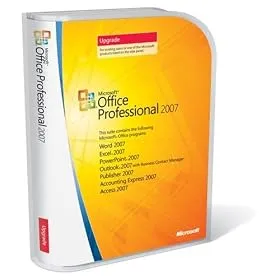
Upgrade to PowerPoint 2007

There a few features inside PowerPoint 2007 that are extremely useful and often not advertised as key reasons to shell out money for a version upgrade of Microsoft Office.

Some of these comments might come across as a bit detailed, but believe me, they do make a big difference.

  • Much improved color management. Once you have defined your color schema, PowerPoint makes it very easy to apply intensity levels of the same color in your presentation
  • Adding a monochrome color overlay to images
  • Sophisticated drop shadows. There are many useless graphical effects in PowerPoint (Microsoft had a look at Adobe products), the drop shadow is the one I actually use
  • 3D text rotation. In a later post I will explain how to stick a 3D logo/text on an image (update: here it is), PowerPoint has a more basic function now that more or less does the same
  • PDF conversion plug, one that is free, and better than Adobe Acrobat (see this post)
  • Smaller file size
  • Much improved editing of data charts, fully compatible with Excel. Creating beautiful, simple and clean data charts used to require a lot of “hacks” in 2003. It’s not perfect in PowerPoint 2007, but a lot better.
  • The proportion of tip of an arrow does not change anymore when you re-size the object
  • The selection pane tool that allows you to edit charts with many overlapping objects, without having to send them to the back all the time.
Continue reading →