SlideMagic Blog

Frequent updates about all things presentations since 2008. Subscribe to never miss a post.

RSS
all posts

Category Books

·Books

Seth Godin's Linchpin: "the good guys can win"

This post will be slightly off-topic: Seth Godin published his latest book yesterday: Linchpin (affiliate link) and I think it is important that as many people as possible absorb the ideas that it contains.

Seth’s books have evolved over the years. What started with insights about marketing (he is the one who opened up our eyes to the fact that anonymous spam email campaigns are not effective), is now moving into the area of leadership and in Linchpin even broader: what is the purpose of the time you spend day in, day out. 

If there is one unifying theme in all his books it would be: “the good guys can win” (came up with this while listening to Leonard Cohen’s song “Everybody knows”). You can be successful by doing remarkable things, without a need to cheat, interrupt, or lie.
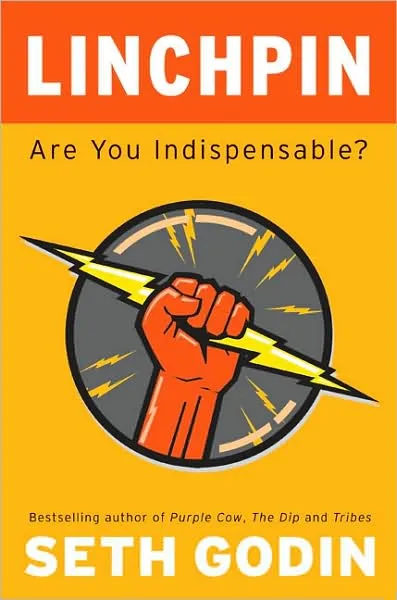
The book opens with a grim analysis of history. Over the past 100 years we have built a society (education, advertising) that trains people to be cogs: cheap, willing, replaceable, numb, insecure people that man the production lines and purchase the stuff that the factory churns out.

It is time to escape the trap and change. It’s urgent. Not changing will get you fired, and/or bore you to death, and/or rob you of your dignity, and/or paralyze your abilities and talents as you live and work in constant fear. On top of that, all of us own so much stuff that we do not even know what to do with it anymore.


Continue reading →
·Books

A presentation about Steve Jobs' presentations

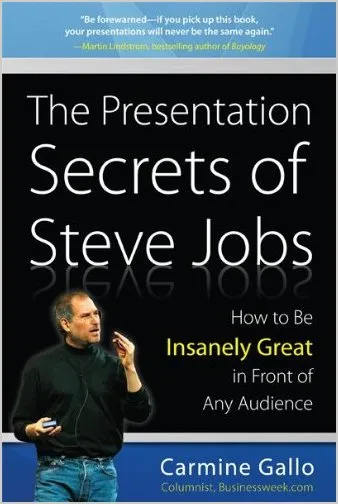
Following my recent review of the book The Presentation Secrets of Steve Jobs, here is a nice presentation summarizing the content of the book.

The Presentation Secrets Of Steve Jobs

Thank you Nancy Duarte for pointing me to this. Disclosure: links on this blogs to Amazon are affiliate links, I earn a small commission when you purchase products through them.

·Books

Book review - "The presentation secrets of Steve Jobs"

Steve Jobs, the CEO of Apple, is a public speaking legend, and in The Presentation Secrets of Steve Jobs, author Carmine Callo aims to give you everything you need in order to be “insanely great in front of any audience” (as he puts it). When I started of reading the book I was not that enthusiastic. The book repeats a lot of the speaking basics that are covered by other authors on the same subject. A very good overview for someone who has not read many public speaking books.

But later on in the book it became more interesting for me, as Gallo goes into the detail of a number of keynote addresses by Steve. As it turns out, Gallo is a speaking coach who works a lot in the high tech sector, a field I recognize since my local clients often are in the Israeli technology industry. Flicking back through the pages, here are some of the ideas I highlighted:

  • The book made be reconsider my aversion towards video in presentations (because it causes so many technological problems). Maybe 10 years later, technology has moved on and it is time to think about incorporating (very short) fragments of video.
  • “Your audience does not care about your product, people care about themselves”. A good reminder when creating presentations that need to sell technology products loaded with features.
  • The concept of “reality distortion field”, being such a good speaker that the audience is basically ready to accept anything from you
  • A reminder how important headlines are
  • A reminder how important it is to practice (if there is one public speaking tip that is important, this one is it). And building on this: you actually need to practice in order to sound spontaneous and speak naturally. Winging a presentation with improvised language and “uhs” and “ohs” does not sound spontaneous and natural.
  • That you need to be Steve Jobs in order to dress like Steve Jobs in a key note presentation.
  • The important of “signalling” making it completely and utterly obvious what the point of your slide/image is. No brain puzzles for your audience.
  • Great speakers remain calm and confident when something unexpected happened, see this video full of Apple bloopers:
Continue reading →
·Books

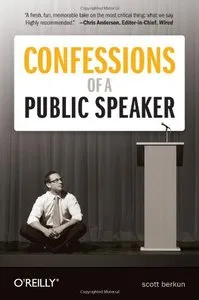
Book review - Confessions of a public speaker

There are many books on public speaking, which probably makes sense: people who are good at speaking on stage usually also enjoy spreading their ideas in print. Many of these follow the same pattern: the experienced speaker explains to us (inexperienced novices who “hum”, read out bullets from the screen, and avoid eye contact with the audience) how we can improve our stage performance.

Confessions of a Public Speaker is different. Scott Berkun is a public speaker, he does it for a living. What makes this book so interesting is that he discusses his own mistakes, failures, and stage fright. He puts into practice one of his techniques to gain credibility with your audience: tell the truth and be honest.

Here are some of the examples of the interesting experience and advice that are discussed in the book. Yes, taken out of their context and in random order:

  • Why it is not useful to imagine your audience naked
  • Even if (you think) you fail miserably on stage, the audience probably won’t notice
  • You have the mike, you are in control, do something nice for the audience (ask to change the freezing temperature of the A/C)
  • Don’t talk endlessly about yourself and your resume
  • I love the chapter about “eating the microphone”. When you start a presentation you have all the attention, the audience really wants you to do well, If things go bad, you will hit a point that you lose the audience, nobody is paying attention anymore. You ate the microphone.
  • It pays of to learn how to write better headlines/presentation titles
  • Anticipate the obvious question that any intelligent audience member would ask.
  • The concept of interference (taken from physics): the audience is still digesting one point when you bring on the next. As a result, both points are lost.
Continue reading →
·Art

Book review - 1001 paintings you must see before you die

Paintings are excellent inspiration for presentation design:

  • Color schemes designed to provoke an emotion, often going against the rules of color theory
  • Lessons in composition and page layout
  • Ideas to give your presentation a distinct style or personality

The Dutch educational system plus graduate degrees in computer science and business administration have not contributed much to my knowledge of art history. I want to catch up quickly, but it turned out to be more difficult than I thought:

  • There are many web sites devoted to a painter or a museum, I have yet to discover one that cuts across artists, locations, styles and periods in time
  • The same issue is true for many art history books: one style, one painter, one museum.
  • More-over art history books (surprisingly) have usually more text than images in them. Text full of elaborate interpretations by the author, that is clearly written with student education in mind.

How happy I was to find this book: 1001 Paintings You Must See Before You Die.

Thousand pages of one painting per page, designed as a guide for museums to visit before your time on the planet is up (but then, there is no clear museum index, and many paintings are taken from private collections).

Leaving this small criticism aside, I found this book truly useful to digest a vast amount of images of paintings in a short time. Color picture, a bit of background on the artist, a bit of background on the painter. It contains both the block busters such as the Mona Lisa as well as lesser known works of art. Great.

Continue reading →
·Books

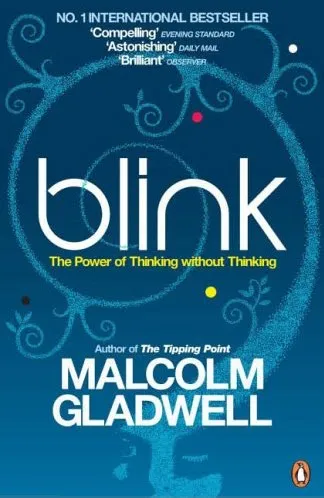
Book review - "Blink"

I finally managed to get to reading Blink: The Power of Thinking Without Thinking. Malcom Gladwell makes an engaging case for why snap judgement often turn out to be right, providing a constant flow of interesting case examples:

  • Firefighters deciding to leave a building seconds before it collapses
  • Art critiques “knowing” that a sculpture is a fake
  • Police agents making the wrong judgement call in a shooting
  • Autistic people unable to follow a pointing finger

The brain is very powerful, it can “thin slice” all memories of let’s say all the people we met in our entire life and stack these up against a new individual in front of us. These powers work best when we are well-rested and not under stress. The human brain is built that in case of stress (i.e., we are trying to shake off a tiger that is chasing us), all non-essential brain functions are shutting down to focus on the immediate task at hand.

This book is not directly related to the subject of presentations, but it is relevant for some issues:

  • The first-second audience judgement that every speaker has to deal with
  • “Thin slicing” of bullet point decks. “Uh oh, the guys starts reading his bullets”/[scan the slide]/[open email on the mobile phone]
  • Count to 10, when a heckler manages to get you upset, wait a bit before answering. In “upset mode” your brain is less effective.

Disclosure: the links to Amazon in this post are affiliate links, I earn a small commission when you purchase items through them.

·Books

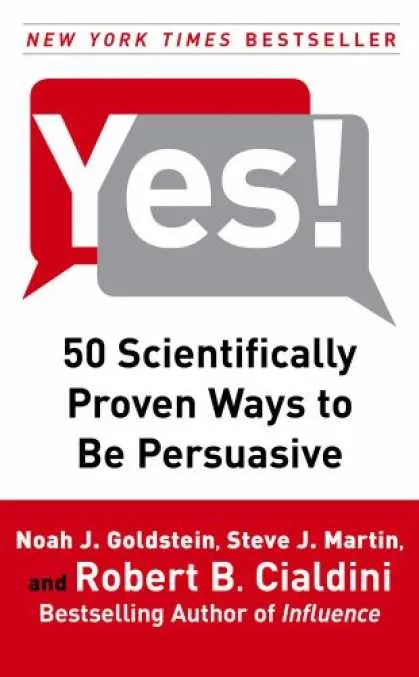
Book review - Yes! 50 scientifically proven ways to be persuasive

The book Yes!: 50 Scientifically Proven Ways to Be Persuasive is the “sequel” to Influence (earlier review here). Building on the approach of Influence, the book discusses 50 techniques to influence people’s behavior. A psychological science experiment is the basis for each technique: the results are discussed and general lessons are drawn out.

As both books are similar, so is my review. The research case examples are great, the generic lessons are sometimes a bit dry. It could have been left up to the reader how to use the findings. There is a lot of overlap with techniques presented in the first book, if you do not have tim to read both, I would recommend reading Influence, since it takes you through the process of thinking about psychology in a more fundamental way when trying to persuade others.

Reading this book once again confirms the potential for visual communication. A lot of these psychological experiments involve people allocated in groups (test group, control group) and various changes in the experiment. Putting the outcomes in simple tables or graphs would have made it much easier to understand the outcome. Now, the reader is left to plough through the text and construct the visual picture in his/her head. Some of the 50 techniques in the book are more powerful than others, some are more relevant to the field of presentations than others. A few here:

  • Create a bond with a group. “The majority of people who stay in this hotel room re-use their towels”
  • Create scarcity: “If operators are busy, try calling again”
  • Very relevant for presentations: watch out for data that can backfire. “22 million single women did not vote”. “Hmmm, that’s a lot, maybe I shouldn’t either?”
  • Create 2 extreme options around the desired outcome: people usually buy the middle-priced wine bottles in a restaurant. (Useful when presenting strategic options to your Board)
  • Big threats don’t work, people block them out. “Smoking kills”. You need to complement the threat and provide an easy, step-by-step action plan to solve the problem.
  • Hand-written post-it notes as a message really work. Thing about adding that personal touch to your presentation slides (by using selective hand-writing fonts for example)
  • Get people to write down a goal at the beginning or the end of the presentation, it dramatically increases the probability that they will act
  • Ask people whether they would be willing to do something later on. If they respond, they are actually more likely to do it themselves in the future.
Continue reading →
·Books

Book review - "Influence - the psychology of persuasion"

The book Influence: The Psychology of Persuasion by Robert Cialdini was added to my Squidoo lens with presentation resources (thank you anonymous reader!). I finally managed to read it. The book aims to teach anyone who needs to influence other people (that includes presentation designers like me) to leverage learnings from the field of psychology.

Like most business classics, the real-life case examples are really valuable; the attempts to draw generic conclusions and insights from them somehow make less interesting reading (although they still are valuable). Just a few examples:

  • A jeweller selling all his slow-moving inventory by accidentally doubling its consumer price
  • Charities harassing people in airports by offering them a flower as a gift, and “forcing” them to contribute a few dollars to the cause
  • Cults and mass suicides
  • Normal people willing to give 220V electrical shocks to other people in the name of science
  • How you can make sure that a crowd of bystanders actually helps you when you need them (spoiler: ask a very specific person to do a very specific thing, crowds usually think that help is already on its way)

The six principles discussed in the book (where possible I added lessons specifically for presentation design)

  1. Do a favor, cash in later.
  2. Get people to commit early on. Presentation use: have people write an objective down on a piece of paper as a group exercise, construct an argument in stages, have them buy into something small early on before the big idea comes later
  3. Social proof, we do what we think others do. Watch out in presentations to make cases like “100m Americans have not signed up to donate blood”. It might just backfire.
  4. We say yes to people we like, we like people who are similar to us. Find a connection with your audience early in the presentation, even if it is a very weak one (“my nephew went to high school in Springfield”)
  5. Use authority. Establish your credibility early in the presentation, as specific as possible. OK: “I am a VC with firm x”. Better: “I personally invested $300m in 35 early stage tech deals”. Quote sources for the analysis and data you are using in your presentations
  6. Scarcity, we like things that are hard to get
Continue reading →
·Books

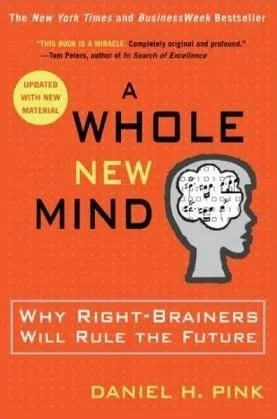
Book review - "A whole new Mind"

Slowly, I am catching up on reading presentation-related classics. This holiday I read through Daniel Pink’s A Whole New Mind.

The subtitle of the book: “why right-brainers will rule the future” is an overly simplistic summary of the main idea. The book’s content is more nuanced. In the “conceptual age” 2 skills are essential:

  • Solving problems in a way that nobody has ever done before
  • Persuading other people, spreading ideas [here is where the link to presentation design comes in]

Why? In current society, supply of goods and ideas is overwhelming. In order to stand out you need to develop a unique edge. The only way to get this edge is through developing “right-brain” skills such as desgn and story telling. “Left-brain” skills such as accounting, diagnosing a patient, applying legal rules are repitive and can increasingly be automated or outsourced to countries with much lower labor cost. A whole new mind is a mind that has a combination of left-brain and right-brain skills.

Some additional thoughts:

  • I think that people will have to learn the boring, repetitive left-brain skills in order to reach the next level of creativity. You need to read and write in order to write a book. You need to understand financial accounting in order to solve a strategy problem. You need to understand how large corporate structures work in order to deliver a presentation that convinces the Board. For example in the field of presentation, I think it is actually the entry of left-brainers into the field that was traditionally dominated by “creatives” that is causing the changes that we see now.
  • There will always be a large number of repetitive left-brain jobs that will not be automated/outsourced, and unfortunately a large group of people that have to do them.
  • It is hard for people to cut themselves free of left-brain corporate environments econcomically. Academia pay is poor. There are only so many spots available at companies such as Google that give their employees free time to work on whatever they want. Not everyone can build up skills that can be marketed in a freelance model profitably.
  • The most successful engineers, accountants, lawyers, surgeons had the combination of left and right brain skills that Daniel is talking about.
Continue reading →
·Books

Book review - "Brain Rules" for presenters

I finally got around reading Brain Rules by John Medina and can confirm that it is indeed essential reading. Not only for people interested in visual communication (the likely reader of this blog). But it is also likely to change some of your fundamental perspectives on life if you are a knowledge worker, a manager, a student, a teacher, a parent, or any combination of these.

The book has been reviewed extensively elsewhere, and a good web site covers its basic ideas centered around 12 rules. I will not repeat this, but rather dive in to some of the details that I marked on the pages because I found them interesting. Most of them (but not all) are related to visual communication. Here we go.

  • Contrary to popular belief that (brain-related) things only go down after the age of 28 (millions of brain cells dying each day), the brain can renew. Just exercise and stay curious.
  • Everyone’s brain is wired differently, wiring gets decided early on in a person’s life. Surgeons about to operate on a patient need to keep the subject conscious with exposed brains, while touching part of it to figure out what’s inside. “Someone just touched my hand”. This allocation might impact performance. “Don’t let the superior temporal gyrus host your critical language area. Your verbal performance will statistically be quite poor”.
  • We don’t register boring things, after 10 minutes of a continuous flow of densely packed information, our attention is close to zero. A presentation should have a break, or something to wake us up every 10 minutes (or better still, presentations should last 10 minutes).
  • The first few moments of exposure to new information are the most important. Presenters should not waste it on boring generic overviews of their presentation, long-winded introductions of themselves. Leverage the fact that all brains in the audience are still switched on.
  • Recalling an emotion at the moment we are fed information the first time greatly improves our ability to remember it. Dare to use creative tools. “Apologies for the ugly drawing of this huge orange turtle, but it walks about as fast as the typical decision making processes in our company”. People will be talking orange turtles for the rest of the day.
  • Vision trumps all other senses is almost a cliche (the 1000 words etc.). We know that images in presentations are important. But here is interesting bit: reading text is difficult. Decode the funny shapes, construct the sentence, understand its meaning… Bullet points and text books create too many processing layers between information and memory. But this gives also food for thought to reconsider some of the “big font/powerful quote” slides. “20% of kids are obese” combined with a huge picture of a fat kid walking out of a fast food outlet. Sounds powerful, but I think visualizing the 20% will do an even better job of getting message across.
  • Vision is more than just registering an image. There are different parts of the brain that deal with color, motion, patterns. The brain is especially good at the latter. Use patterns, repetitions, in charts. Especially to visualize data.
  • The brain fills in missing gaps in a visual picture. When you imagine something should be there, you see it. Drawings don’t need to be perfect. Rely a bit on the audience’s imagination.
  • Meaning before details. We need to internalize what things mean before we can remember them. Out with the buzz words, out with the cliches. “Our new holistic security concept delivers scalable ROI that helps you stay competitive in an ever changing world”.
  • People need to sleep to function well. Poor sleep kills 20% of your brain power, that’s about 2 hours worth of work for an average working day. Brains are build to deal with short-term stress (“help a tiger!”) but cannot handle prolonged pressure. Manage your deadlines. A last minute, late night presentation iterations will for sure not deliver a brilliant end product. Our brain continues to chew on an idea in our sleep, give it time. These findings put into question the whole system on which corporate work environments are managed.