

The book Influence: The Psychology of Persuasion by Robert Cialdini was added to my Squidoo lens with presentation resources (thank you anonymous reader!). I finally managed to read it. The book aims to teach anyone who needs to influence other people (that includes presentation designers like me) to leverage learnings from the field of psychology.
Like most business classics, the real-life case examples are really valuable; the attempts to draw generic conclusions and insights from them somehow make less interesting reading (although they still are valuable). Just a few examples:
- A jeweller selling all his slow-moving inventory by accidentally doubling its consumer price
- Charities harassing people in airports by offering them a flower as a gift, and “forcing” them to contribute a few dollars to the cause
- Cults and mass suicides
- Normal people willing to give 220V electrical shocks to other people in the name of science
- How you can make sure that a crowd of bystanders actually helps you when you need them (spoiler: ask a very specific person to do a very specific thing, crowds usually think that help is already on its way)
The six principles discussed in the book (where possible I added lessons specifically for presentation design)
- Do a favor, cash in later.
- Get people to commit early on. Presentation use: have people write an objective down on a piece of paper as a group exercise, construct an argument in stages, have them buy into something small early on before the big idea comes later
- Social proof, we do what we think others do. Watch out in presentations to make cases like “100m Americans have not signed up to donate blood”. It might just backfire.
- We say yes to people we like, we like people who are similar to us. Find a connection with your audience early in the presentation, even if it is a very weak one (“my nephew went to high school in Springfield”)
- Use authority. Establish your credibility early in the presentation, as specific as possible. OK: “I am a VC with firm x”. Better: “I personally invested $300m in 35 early stage tech deals”. Quote sources for the analysis and data you are using in your presentations
- Scarcity, we like things that are hard to get
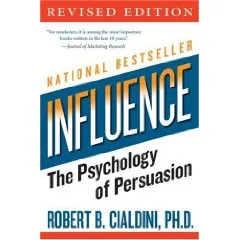
The first edition of the book was written in 1984 and despite some updates it is still a book that does not mention the word “Internet” in any of its 320 pages. Online user behaviour must provide an ocean of interesting case examples for psychologist to analyse that can add to the content of this book.
Also, the marketing philosophies are before concepts such as permission marketing introduced by Seth Godin. It’s all about extracting that extra bit of money on a car deal, pushing people to sign to buy that fridge now, organize tupperware parties at which your friends feel embarrased not to buy anything. Sad marketing techniques.
In short interesting reading if you put the book in the context of the time it was written.