SlideMagic Blog

Frequent updates about all things presentations since 2008. Subscribe to never miss a post.

RSS
·Delivery

TED parody

This video of a TED talk parody was uploaded a couple of months ago and I missed somehow. Yes, it is a parody, but in the between the lines (the content is non-existent) it actually shows how body language, pausing and pacing can give you a better stage presence.

·Investor presentation

PR people and journalists

WebSummit was full of them. Apparently, there are 5 PR people for every journalist on earth. Each journalists in the tech world receives about 200 emails, pitches, stories per day. I listened to a panel with PR people and journalists discussing thing with each other. Here are my impressions partly driven by what they said, partly what I read between the lines.

Your product is actually not that interesting to them. Two hundred products per day, lots of copy cats (“Uber for X”). I actually think journalists don’t have time, take the time to understand a technology, and hence don’t find it interesting and/or write about it. It takes me a good 45 minutes to understand a company well, a journalist does not have that time, the reader does not have that time, and most journalists don’t have an engineering background.

Big milestones are actually not that interesting anymore. Everyone raises $100m at a $1b valuation.

Other aspects of “your story” (becomes a buzzword) are more interesting. Did you come from an unusual background, does your company have some sort of social, environmental purpose (primary, or a side effect).

Do you actually need to be in a major Silicon Valley tech publication? If your target customers are in those circles, then yes. Maybe if you need to those “featured in” logos on your web page to strengthen your pitch to SV investors, yes. But otherwise, maybe spend your time and effort somewhere else.

“Social media” is becoming crowded and busy as well. With so many people creating noise, it actually boils down to a product that people want to use and talk about to their friends. Not so much social media, more building a great product.

Continue reading →

Stale case examples

In one of the panels at WebSummit, a participant made a number of mistakes:

  • She mentioned the One Dollar Shave Club video
  • She went on to explain that the One Dollar Shave Club sold their first batch of inventory straight after the video went viral (“can you believe it?”)
  • She went on to explain that the  One Dollar Shave Club was acquired for (“how much was it again?”) one billion dollar for only hundred million dollar in sales

That was 2 minutes (be brief on panels) of a panel full of tech geeks who know this story (know your audience) with a hard to achieve advice: make your startup story as good as the One Dollar Shave Club video (the video, not the product).

When you start to mention a stale case example, and show that you are going to spend time explaining it, the audience knows what will follow in the next 5 minutes and you lost them. (The as an audience arriving at the bottom of a bullet point chart reading before you even finished reading out bullet point one aloud.

If you were not the first YouTube viewer who noticed the One Dollar Shave Club video an hour before you speak, use a more personal, original, case example. It is a great video though…

·Investor presentation

Y Combinator on "good advice"

I set through a panel with partners from incubator/investor Y Combinator today here at WebSummit in Lisbon. The topic was about which advice is useful, which not, partly in the context of fund raising. Startup CEOs get bombarded with advice, while almost all advice sounds credible, not all the people who are given you advice (prompted, or unprompted) know what they are talking about.

As panels go, there was a lot of “noise” but these guys had a few pretty good points. Advice from these type of people might help you:

  • People that have just done something that you are about to do, try to lift yourself up to the next level. They raised series A, you are getting ready for that round as your Seed funding dries up.
  • People who have done that very recently and have “fresh” knowledge. The shelf life of advice is pretty short: technology moves on, the fund raising market develops, etc. etc.

Keep it in mind when someone critiques or praises your slides.

·Investor presentation

"They are just interested in the numbers"

One client told me the other day that a later-stage investor was interested in investing in his company, and the main interaction was with a relatively junior analyst who kept on asking questions about the numbers in the business plan, rather than probing the quality of the technology.

This can mean 2 things:

  • The best way to present to late-stage investment fund focus most of the time on presenting growth assumptions to the junior analyst
  • The company went more or less through the full due diligence of the company, they (think they) understand the main strengths and weaknesses of the technology, what is left to be done is stabilize the numbers in the valuation model.

Option 2 is probably more likely. Although they keep on asking for numbers, does not mean that the overall story and context is not important.

Visuals, but not for the presentation

I use visuals for presentations in 2 ways. One is the obvious use: put visuals on slides (duh). The other one is actually to design the story of the presentation.

Very often, pitches are about why something is better, why existing solutions don’t work, why the market is focussed on yesterday’s problems. I create a diagram for myself to create some sort of map where I can put all the elements, comparisons, and movements of a story. It starts simple, then gets really messy and complicated, then gets simplified again.

With that little piece of paper I go back to the slides of the presentation, and it is highly unlikely that my sketch visual and the visuals in the presentation have any similarity.

Image from WikiPedia

·SlideMagic

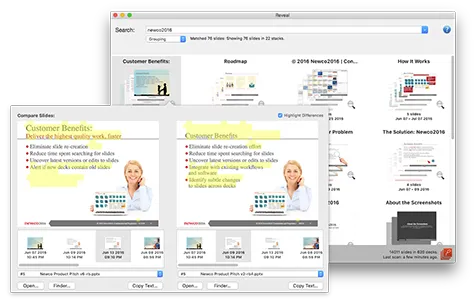
SlideMagic UI improvement

We put in a number of improvements to the user interface of my presentation design app SlideMagic.

Templates, regular decks, duplicating, importing, etc. was all a bit confusing. We made a number of improvements to make the workflow more intuitive.

  • The concept of “template” (as opposed to regular deck) was eliminated. Now every SlideMagic user will see a number of “featured decks” at the top of the regular decks menu which can form the inspiration of your own presentation.
  • In the story view (the slide sorter), the 2 clipboards (one for individual slides, one for full decks) were integrated into one. All slides you import will now appear here, together with the ones you copied from your current presentation.

The account, support, and logout links that used to sit at the bottom left of the screen have been moved up. These buttons caused issues on smaller screens, especially tablets. As a result, SlideMagic is now running pretty well on iPad. I am not a big believer in designing slides on a small screen/tablet, because you need a decent canvas to focus and be creative. But, it can be handy to have the option to make smaller edits on a mobile device and that is now going pretty well with SlideMagic.

Let me know if you have any more feedback on SlideMagic here in the comments or by sending a message to jan at slidemagic dot com.

·Delivery

Panels = entertainment

Another good video by VC Mark Suster about how to speak when invited on a panel:

  • Entertain
  • Be energetic
  • Be short and to the point (people don’t remember who long you spoke, but what you said)
  • Say something different than the person before you
  • If the moderator asks the wrong question, answer a different one

I would also add that pitch competitions are a form of entertainment. A pitch for such an event is completely different from a pitch to the partner group of a VC.

And most of the time, pitch competitions are far more entertaining than panels. In a pitch competition, the presenter is on the line, sharp. People in panels usually do not prepare and can hide behind the others on stage, making them a lot less interesting to watch.

·Story

Sounding convincing, versus actually convincing

Some people naturally sound convincing. They have charisma, they find it easy to tell their story, they are confident, they can wing the presentation, they say that they consider themselves good presenters. They sound convincing, but do they convince?

Many of the people who fall in this category are not very good at reading body language. Maybe the buyer or investor on the other side of the table is (slightly) introvert and does not push back that much. Maybe if the same type of question comes back for the third time (after 2x the same sort of answer), the answer was not very clear. Maybe there is a difference between a great meeting with great energy, and a decision to buy/invest.

As a presentation designer, I have built up another type of self confidence: not being ashamed to ask again if something is not clear, even if it is the fifth time. If I don’t get it, the presentation I am going to design will also not get there. Investors and buyers won’t be as patient as presentation designers

Image from WikiPedia

·Investor presentation

Triangulating market sizes

It is hard to forecast the size of a market that exists today in a few years. It is impossible to predict the size of a market for a product that does not even exist. Startups working on new products deal with this issue in every investor presentation.

My suggested solution: come at it from different directions to give a potential investor confidence that there is something there.

  • Big billion dollar point estimates from Gartner or IDC research reports, and pointing out that in the future part of that spend might be cannibalized.
  • Looking at comparable markets. For example IT security spend is roughly 10% of every IT budget. If you are working on a new product category that you think will be as indispensable as IT security, you can provide a market size range by applying a % to a future IT spend forecast.
  • Going down to company level, and point out that of the few pilot customers you have, they were willing to pay x$ per seat, x% of their IT budget, and then scale that up to the total market.
  • Bottom up: customers x product per customer x price per product
  • Etc.

In most cases your “made up” numbers which are backed up by a transparent and logical analysis will be more useful than point estimates lifted from out-of-date, out-of-context research reports.

Image from WikiPedia