

SlideMagic Blog

Frequent updates about all things presentations since 2008. Subscribe to never miss a post.

RSS
all posts

Category Sales presentation

·Sales presentation

Cold email subject lines

As a founder of two software startups, I started to receive a lot of cold emails from software vendors that sell to startups. Most people who write them, have read the marketing story telling Bibles: people try to catch my attention with a headline that tries to connect with me (“Hey SlideMagic, wouldn’t it be great to increase conversion by 10%?”), take action (“Speak to you on our Zoom next Tuesday” , but I never agreed to the call), and are persistent and very self-aware (“Yes, I know this is the third time I send this email”).

The only thing these subject line tells me, “this is spam”, before I even understand what they are trying to sell.

A better way (for me at least) would be to write a subject line about what your company does without the marketing language that in 2023 sounds spammy.

PS. A startup idea for someone to build: develop a granular set of codes to classify software vendors, include that in the email (subject line), and offer an email filter to classify the marketing emails. Recipients can browse later for solutions they need and/or (silently) let emails from relevant vendors get through (some sort of category subscription). Lots of revenue model options.
·Layout

Showing busy bios on a web site

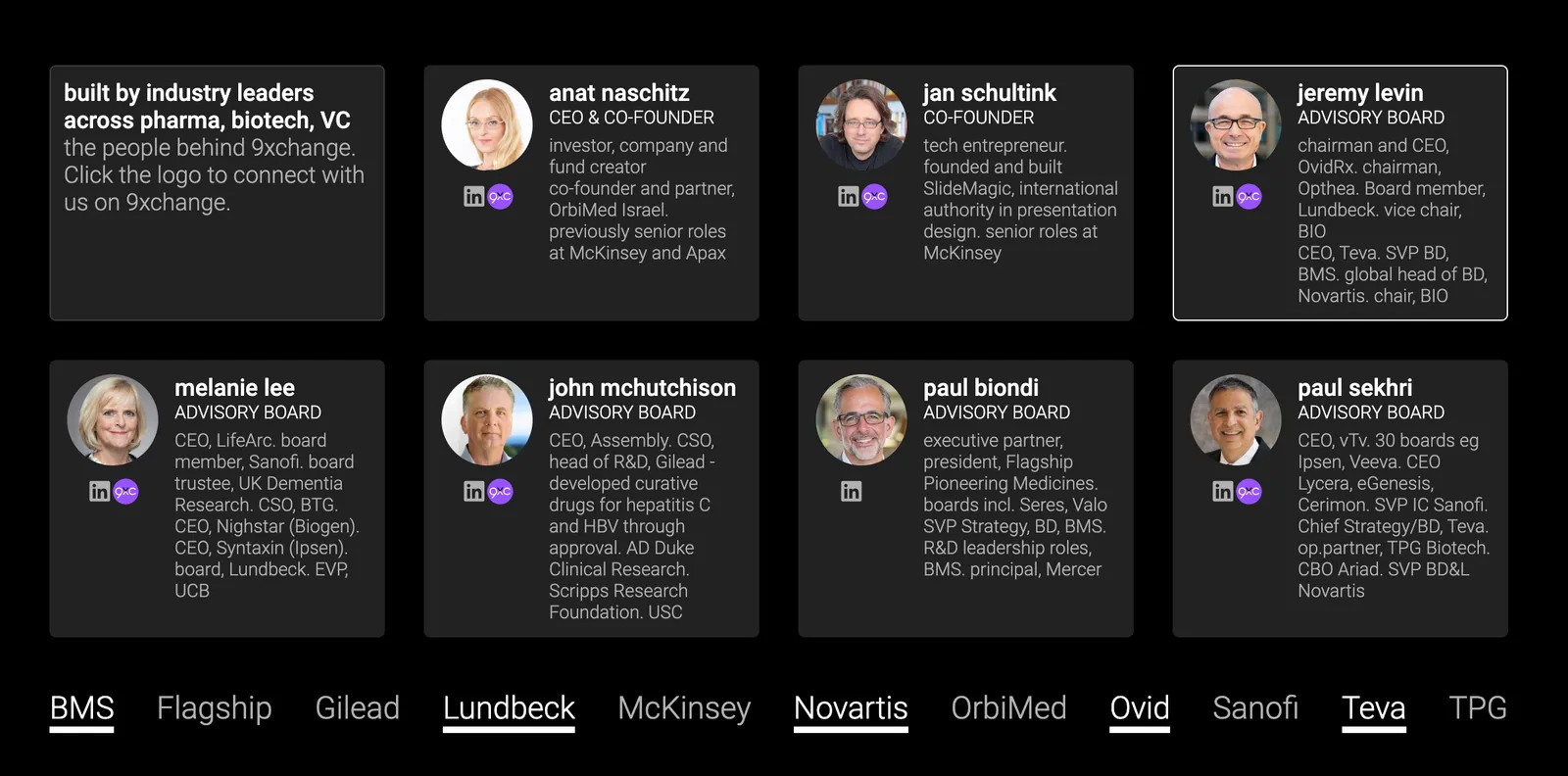
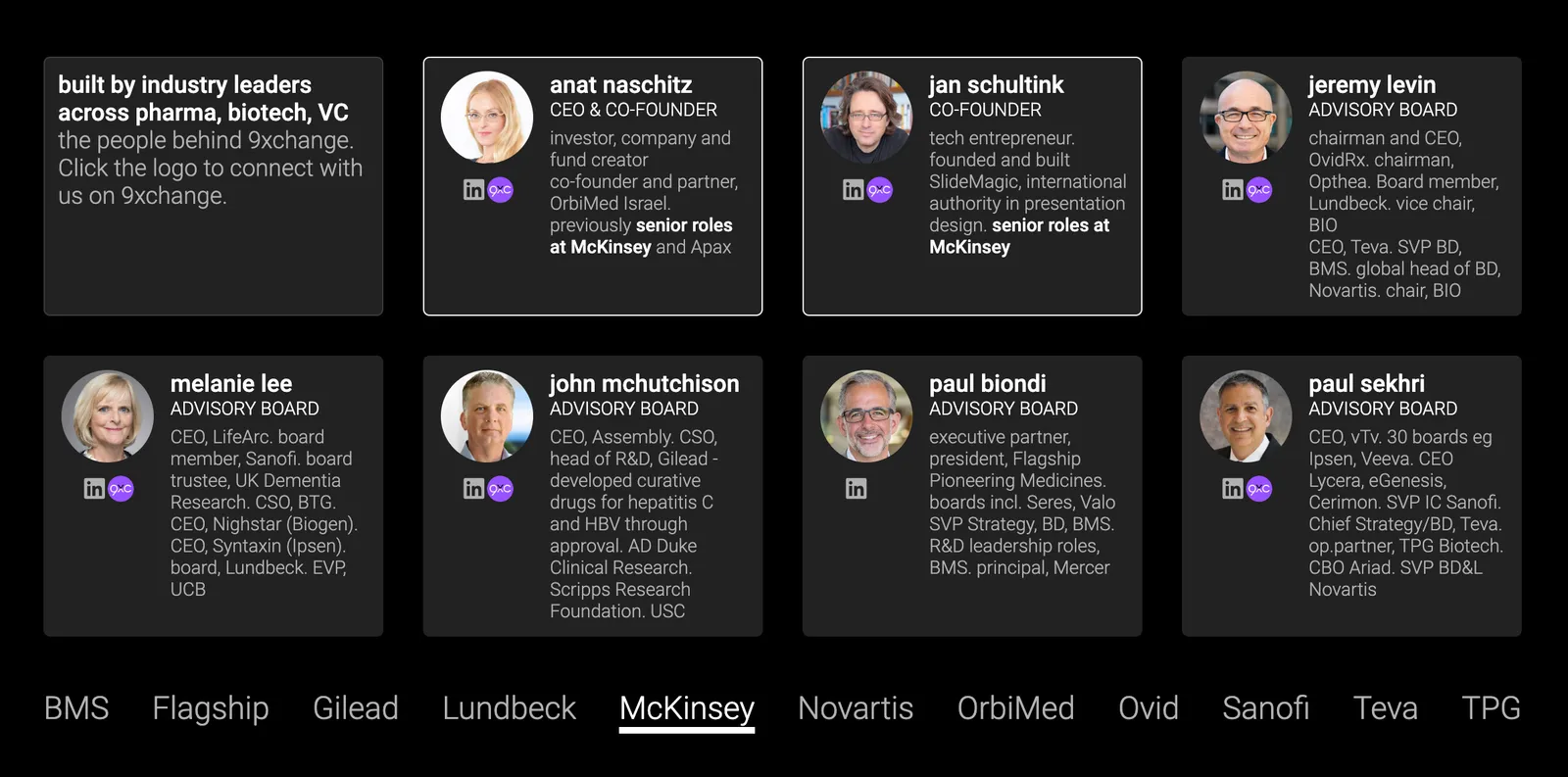
My venture 9xchange is new in the world of healthcare, wo we need to establish credibility by showing that we have significant experience and are backed by significant people. Here is what I came up with (see the 2 screenshots below).

I put up a dense grid with the bios of the people involved. Below this table, are a few recognizable brands from the world of healthcare. When you hover (or click on a tablet) over a person’s bio, a relevant subset of the brands light up.

Alternatively, when you hover over, or click the brands at the bottom, relevant people get highlighted, including the relevant small print in their CV.

You can check out the progress of the work on the 9xchange website.

·Sales presentation

Three audiences for your company brand

A company brand has at least 3 audiences:

  • Employees (including the founders), that need an inspiring and cool place to work
  • Users that are looking for a brand that fits and appeals to the target market
  • Investors who are looking at a fundable organization with fundable founders

Think about conflicting requirements when picking your name. Priorities might also change over time. Investors are very important early on, users a bit later. Your first collaterals (decks, a web site) are probably directed at investors.

This post was sparked by overhearing two conversations: one about whether picking a cartoon character as a company name would hurt appeal to investors, and one where a company named itself after an industry it explicitly claimed not be in.

·Investor presentation

Send a different deck?

After the meeting you promised to send the slides of your presentation in an email. But the deck you used, was the short one, and you have a better/longer one sitting on the shelf. It does have a different structure and graphical look and feel though. Should you send it instead?

Probably not. The slides you send are a quick reminder of the meeting, a permission to email the meeting attendees with your follow up question. Very few people might actually look at the slides in detail. And if they do, each slide is a visual placeholder for the story you told in the meeting. Sending a completely different deck might confuse them.

If you want to send the other presentation, do so in addition, and clearly mark it as something different from what they have seen.

More pro tips for follow up decks:

  • If slides contained semi-confidential information that was OK to show for 5 seconds, you can take them out in this version to prevent people from studying things in detail (financials, roadmaps, etc.)
  • Always send things in PDF, not the source file (PowerPoint .pptx, or SlideMagic .magic)
  • If you are using SlideMagic, consider expanding the explanation panels on each slide, and write the summary of the messages of the slide in a few paragraphs, handy for people to understand a page better when you are not there in the room to explain things verbally.
·Sales presentation

Scripted improvisation

I just came back from an industry conference that involved all day, back-to-back, 25-minute meetings in small hotel rooms. Professional speed dating. Very similar in setup to the days I spend interviewing MBA graduates for roles at McKinsey at INSEAD.

These meetings are a challenge. You get tired (especially if you are jet legged), the setting is repetitive, and very unpredictable meeting dynamics and energy in the room. The setting is not right for a formal presentation. You have very limited time, the room is tiny without a screen to project slides, and the setting is very informal. The risk in this setting is that you never get to get your point across in the middle of small talk, room changing logistics and/or the distraction of cleaning staff replenishing the soft drink supply in the room.

In this informal setting, most presenters would “wing it”. Start a pitch in a conversational, improvised way, and see where it takes you.

I would recommend to do the opposite. Have a super tight, very short story, completely engrained in your mind. It is super-scripted, 100% the same in every meeting, and hits exactly the points you want to hit, in the right order. You have practiced and used the script so many times, that you can deliver it jet lagged, distracted without thinking, and most importantly, sounding completely non-scripted. It may sound strange, but the more you practice delivering a these short pitches, the more natural they sound.

As the story goes on auto pilot, you are sure that your messages get delivered, and your brain can focus on reading body language, and connecting with your meeting guests in pre- and post small talk. And remember, in these short meetings, your objective is to get to the next interaction, rather than landing the whole deal.

·Sales presentation

Getting the same question all the time...

Writing emails to busy people is hard. One thing to keep in mind is that they usually get the same type of question.

  • Can I meet you for a coffee?
  • Do you want to be on my Board?
  • Do you want to invest in me?
  • Do you want to buy my software?

If you are asking one of these questions, stand out from the others

If you are actually not asking one of these questions, make it very clear. Your email might get eyeballed very quickly and rejected with “no, I don’t have time for more Board seats”…

·Investor presentation

Business plan - story mismatch

In business school we learned how to write a business plan and which slides go with it: market size, competitors, business model, etc. etc. The resulting slide deck is usually the first “presentation” of the company and often used as the basis for an investor or sales pitch deck as well. (Same happens when the last Board strategy deck gets recycled into a sales presentation for a more mature company).

Board presentations and business plan presentations are well, sets of slides that serve Board and strategy meetings. A sales or investor meeting requires a sales or investor presentation.

If you noticed that you always deviate from your slides when pitching your company, you might have the wrong slide deck in front of you,

·Sales presentation

John Mayer's marketing video

Guitarist John Mayer starred in the launch video for a more affordable version of his signature guitar for PRS Guitars. Some interesting presentation lessons in here.

  • It worked, the video gets even linked to on a presentation blog
  • A naked and vulnerable pitch. A bare bone background, just him and the instrument, putting his entire reputation at stake by recommending this guitar. “Skin in the game”. Different from celebrities wearing a watch, driving a car, or holding an espresso cup.
  • A very nice use of the “best of both worlds” storyline. Up until now you had to choose between A or B, but as of today, you can have both.
  • Very clever addressing of target audiences. Hard core guitar players that admire John for his skill, and die hard fans that admire John for his songs are included implicitly. But parents buying guitars for their kids (and maybe secretly for themselves) are addressed directly with a clear excuse to go and get one.

A great sales pitch

·Sales presentation

What your audience does not know

It is a waste to spend presentation on things your audience already knows, or already assumes is the case.

  • Already knows: common knowledge among informed audiences. A specialized investor who invests in crypto knows the basics of what is going on in that market.
  • Already assumes: something that people guess instantly, you IPO-ed both of your 2 previous startups, so the question can she be a startup CEO does probably not need any more time

You can score the obvious points very quickly with a snap reminder slide. Now it is time to move on to things that might surprise the audience (in a good way).

But remember, things can work the other way:

  • Already knows: “It is impossible to make good returns in healthcare diagnostics”
  • Already assumes: “She looks like she just got out of college, she cannot sell to big pharma”

Put yourself in the shoes of the adience.

·Investor presentation

"You had me at hello"

The quote from the Jerry Maguire movie. Some pitches go well. Maybe because the other side knows you, trusts you, knows the industry/competition well, and is ready to take things to the next step. No point in trying to pick up the pitch at page 15 with that very optimistic revenue forecast, and/or booting up that demo with potential bugs. That can happen in the next meeting.