SlideMagic Blog

Frequent updates about all things presentations since 2008. Subscribe to never miss a post.

RSS
all posts

Category Delivery

·Delivery

How to report the news

Late again in discovering an amusing video (1.3 million people saw it before I did over the last 3 weeks). Charlie Brooker is making fun of your typical TV journalist video report.

Some presentation lessons:

  • Professional journalists rigorously stick to the focus-on-one-message-only rule. The introduction summarizes the message, the question already contains the answer (the message), and the wrap up repeats the message. I am all for clear messages, but sometimes you run the risk of insulting the audience with over-simplification. I am not a big fan of the “tell what you will tell them, tell them, tell what you just told them” structure.
  • See how the background visuals are actually distracting: you switch off mentally, go in remote control TV mode, and start paying attention to “what street in London is this?”, “where is that accent from?”, you hardly notice that some of the interviewees are speaking Gobbledygook.Your visuals should be good, but not claiming all the attention (earlier post).
  • Videos can be great at conveying messages in a short time frame. This “boring” video took 1:59, but see what a different approach can do in 1:30 here.

Thank you Joe Mako
·Delivery

The audience wants you to succeed

Fear of public speaking often stems from the speaker thinking that the audience’s main objective is to criticize her performance. The opposite is true: the audience wants you to succeed. First of all because of selfish motivations; nobody wants to be bored.

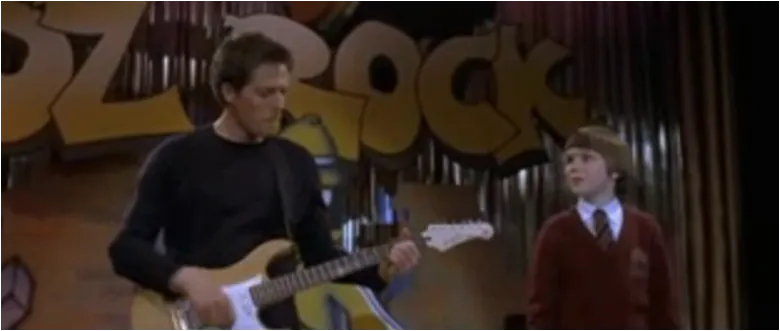
But there is an emotional driver as well. People (in the audience) do not like to subject themselves to an embarrassing situation. Watching this movie clip from the film “About a boy” creates that exact feeling in your stomach (I cannot embed it for some reason).

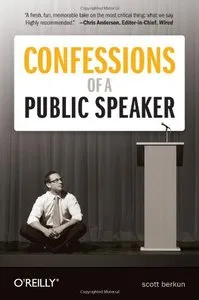
The book “Confessions of a public speaker” has a great section on public speaking anxiety. Seth Godin thinks that fear of public speaking is the a prime example of our lizard brain at work.

·Delivery

The entire Jobs' iPad speech in 180s: passion

Presenting is not a casual discussion, it is a performance. When you are not passionate about what you are presenting yourself, do not expect your audience to be. This short video compilation of Steve Jobs’ iPad launch speech shows how he packed his talk with enthusiasm. Something to learn from, but also to make you smile.

·Delivery

"Why are TED presentations so polished?"

This question was asked by David Semaria on Mark Suster’s excellent blog “Both sides of the table”, a must read for anyone who needs to pitch to VCs.

Here is my take on the question why TED presentations are so “polished”:

  1. A tough pre-selection: you need an interesting story even before the PPT slideware is opened to create the presenation
  2. A ruthless 18 minutes cutoff makes you practice
  3. Peer pressure of a good speaker line up makes you practice
  4. The “threat” of a global video audience makes you practice

You can argue that it can be hard to sometimes to meet point number 1. Number 2, 3 and 4 are all about practice, your presentation can benefit from it too. There is no excuse not to practice, practice, and practice.

·Delivery

Practice, practice, practice - please read the body of this post as well

Practice, practice, practice.

Every public speaking book talks about it (this one and this one for example). Every presentation design and public speaker blogger repeats it all the time. So much so, that it is tempting just to speed read over the paragraph to get to the cool stuff about adding that 3D shadow to your slide. “Hey, I am a confident speaker, ticked that box”

Some sentences to get you to change your mind:

  • Steve Jobs practices for roughly 2 days full time before his keynotes
  • When your are confident you know your stuff, test yourself: close the office door and do the first 3 slides as if it were the real thing. Did that came out brilliantly? If it did, congratulations, because this first test run is exactly how your opening would have come out in front of a large audience. If it did not go that well, congratulations, you just got yourself a good incentive to start practicing.
  • Spontaneity does not equal winging your story, a good movie actress can only come across spontaneous if she now her stuff inside out
  • If you know your material inside out, all the presentation professional’s talk about cutting bullet points and clutter will come naturally to you: you do not need on-screen speaker notes anymore.
·Books

Book review - Confessions of a public speaker

There are many books on public speaking, which probably makes sense: people who are good at speaking on stage usually also enjoy spreading their ideas in print. Many of these follow the same pattern: the experienced speaker explains to us (inexperienced novices who “hum”, read out bullets from the screen, and avoid eye contact with the audience) how we can improve our stage performance.

Confessions of a Public Speaker is different. Scott Berkun is a public speaker, he does it for a living. What makes this book so interesting is that he discusses his own mistakes, failures, and stage fright. He puts into practice one of his techniques to gain credibility with your audience: tell the truth and be honest.

Here are some of the examples of the interesting experience and advice that are discussed in the book. Yes, taken out of their context and in random order:

  • Why it is not useful to imagine your audience naked
  • Even if (you think) you fail miserably on stage, the audience probably won’t notice
  • You have the mike, you are in control, do something nice for the audience (ask to change the freezing temperature of the A/C)
  • Don’t talk endlessly about yourself and your resume
  • I love the chapter about “eating the microphone”. When you start a presentation you have all the attention, the audience really wants you to do well, If things go bad, you will hit a point that you lose the audience, nobody is paying attention anymore. You ate the microphone.
  • It pays of to learn how to write better headlines/presentation titles
  • Anticipate the obvious question that any intelligent audience member would ask.
  • The concept of interference (taken from physics): the audience is still digesting one point when you bring on the next. As a result, both points are lost.
Continue reading →
·Delivery

Does the multi-story-rock-star-presenter exist?

I was wondering this the other day. Many of the best presenters nurture one story year after year after year, and are getting better and better and better at it.

  • Best-selling authors previewing their book
  • CEOs pitching their company’s products
  • Gurus urging us to leave our cubicle to do what we are really passionate about
  • TV evangelists trying to save our soul
  • Presidential candidates preaching hope
  • Social media experts telling us that luckily we are one of the few who really “get it”

Is there such a thing as the multi-story rock star presenter?

Osho greeted by sannyasins on one of his daily “drive-bys” in Rajneeshpuram, 1982. © 2003 Samvado Gunnar Kossatz

·Delivery

Switch off your parallel visual thinking - only rehearse out loud

You flick through the slides of your presentation on the way to the venue in the taxi. The slides look great, the story is perfectly clear.

Not anymore when you are on stage.

A live rehearsal is the only way to go. And not only to practice stance and eye contact (with the mirror in front of you).

You need to switch your brain from parallel to sequential processing. An image says more than a thousand words. If you look at your own slide it all fits together perfectly. That image, the diagram, those 2 words, the pressure of the 2 opposing arrows. For you (the slide designer), it triggers a complex set of thoughts in your brain.

The audience does not have any of this. You need to translate that complex mental picture into a sequence of thoughts and sentences that allow your audience to get that same insight.

The only way to do that is to “switch off” your parallel visual thinking and start listening to your own sequential stream of words.

·Delivery

Presentation lessons from watching a startup competition

I attended an Internet industry conference today and witnessed presenters in the final of a startup competition: a few minutes to present your company to a huge audience with a ruthless timer ticking away.

  • Putting your entire 30 minute story on 1 slide does not make it a 5 minute presentation
  • Accept that you cannot tell all: ruthlessly cut nuances, side tracks, feature lists.
  • “Waste” some time upfront in establishing a connection with the audience. Maybe a quick hand voting. In the first few seconds people are “trying to figure you out” and are not paying attention to the content. “Is that a Danish accent?” If you give the punch line during this time, It will not stick
  • Assume your audience has absolutely no clue (about your company), but also assume that they are very intelligent at the same time. No buzz words. Clear explanations.
  • Use facts, numbers. But use them only once. Five minutes is too short a time to repeat the succes of that major customer you won last week
  • 500-1000 people is a huge crowd. Leave memorable contact details. “Out booth is outside”, or a very simple email address.
  • Answer questions very, very briefly, don’t go off on a tangent, or repeat the presentation you just gave.
  • Don’t run out of time. Definitely don’t make your punch line when bells start ringing and the screen behind you starts flashing to remind you that your time is up. Again the punch line will not stick
·Delivery

Godin and Becker on planning for the end

Do you save the most important part of the meeting for the end, when everyone is already standing? See Seth’s Godin full post here. Bert Decker added additional thoughts here. Things you should NOT do:

  1. Step back
  2. Look away
  3. Move on the last word
  4. Raise your hands
  5. Rush to collect your papers
  6. Blackball yourself